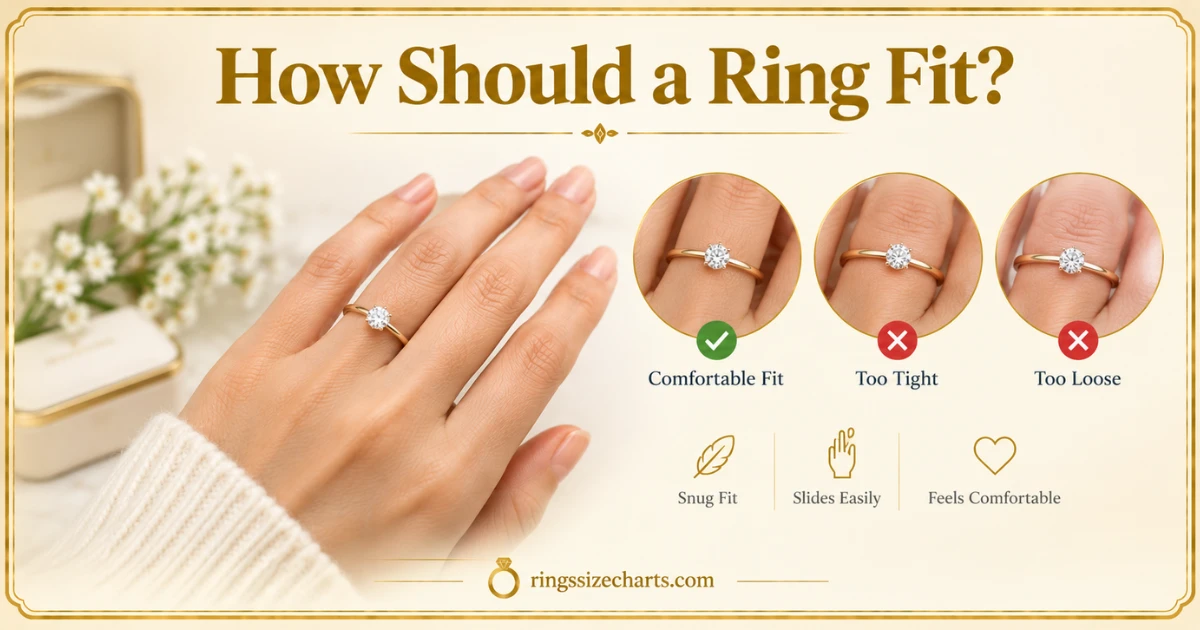
A well-fitting ring slides over your knuckle with gentle resistance, then rests comfortably at the base of your finger. It shouldn’t pinch, spin excessively, or leave marks on your skin.
The right ring size makes a big difference in how comfortable and secure a ring feels throughout the day. A properly fitted ring should sit comfortably on your finger without feeling too tight or sliding around.
Think of the fit like a firm handshake—secure but not squeezing. This guide explains how a ring should fit, what a comfortable fit feels like, why finger size can change, and what to do if your ring feels too tight or too loose.
Signs Your Ring Fits Perfectly
Slight Resistance Over the Knuckle
Your ring should require a small push to get past the knuckle. This little bit of friction is what keeps the ring from sliding off later.
Snug at the Base of the Finger
Once past the knuckle, the ring should sit comfortably at the base of your finger. There shouldn’t be a gap you can see or feel underneath the band.
Minimal Spinning or Movement
A correctly sized ring can rotate a little but shouldn’t spin freely around your finger. Excessive spinning is one of the fastest ways to spot a loose fit.
Easy but Not Effortless Removal
Taking the ring off should take a light tug, not a fight. If it comes off with zero resistance, that’s a sizing red flag.
More Posts: How to Measure Ring Size
Signs Your Ring Is Too Tight
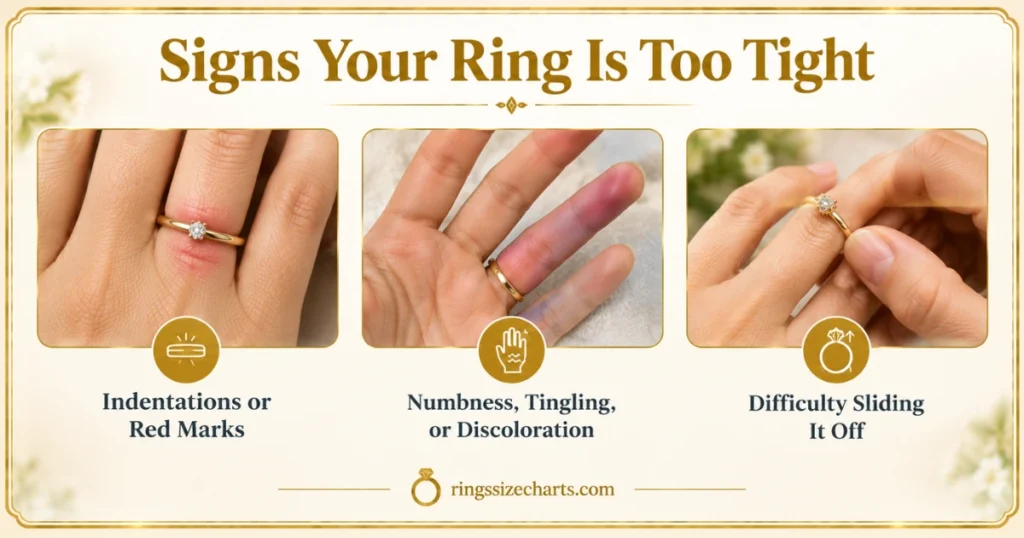
Indentations or Red Marks
If you see a deep groove in your skin after taking the ring off, that’s a clear sign it’s too small. Comfortable rings shouldn’t leave lasting marks.
Numbness, Tingling, or Discoloration
A ring that’s cutting off blood flow can cause tingling or numbness in the finger. This is a stronger warning sign than simple discomfort.
Difficulty Sliding It Off
If removing the ring feels like a struggle every single time, the fit is too snug. This is especially true if it happens even without swelling.
Signs Your Ring Is Too Loose
The Ring Spins Constantly
If your ring’s stone won’t stay centered and keeps rotating toward your palm, the band is too big. This is one of the most common complaints jewelers hear.
It Slides Past the Knuckle Too Easily
A ring that glides off without any resistance at the knuckle is a loose-fit warning sign. Cold or wet hands make this problem even more noticeable.
Why Does Ring Size Fluctuate?
Time of Day and Body Temperature
Fingers are usually smallest in the morning and largest by evening. Heat causes blood vessels to expand, which slightly increases finger size.
Water Retention, Diet, and Sodium Intake
High sodium intake and dehydration both cause temporary swelling in the fingers. This is why a ring might feel tighter after a salty meal.
Exercise and Weather Changes
Physical activity increases blood flow, which can make fingers swell slightly during a workout. Cold weather does the opposite, shrinking fingers by restricting circulation.
Knuckle Size vs. Finger Base
If your knuckle is noticeably bigger than the base of your finger, you may need a size that works for both. This gap is a common reason rings feel snug going on but loose once seated.
More Posts: Average Ring Sizes for Women and Men
How to Measure Your Ring Size Accurately
Professional Jeweler Sizing
A jeweler uses a metal ring mandrel to measure your finger with precision down to a quarter size. This remains the most reliable sizing method available.
At-Home Ring Sizers
Printable ring sizers and plastic sizing rings let you estimate your size from home. They work well as a starting point but are slightly less precise than in-store tools.
Best Time of Day to Measure
Measure your finger in the afternoon or evening, since morning readings tend to run smaller. Avoid measuring right after exercise or in cold temperatures.
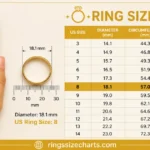
US Ring Size Chart: Diameter Reference
| US Size | Diameter (mm) | Circumference (mm) | Circumference (inches) |
|---|---|---|---|
| 5 | 15.7 | 49.3 | 1.94 |
| 6 | 16.5 | 51.9 | 2.04 |
| 7 | 17.3 | 54.4 | 2.14 |
| 8 | 18.1 | 57.0 | 2.24 |
| 9 | 18.9 | 59.5 | 2.34 |
| 10 | 19.8 | 62.1 | 2.44 |
Ring Width and How It Affects Fit
Wider Bands Fit Tighter
A wide band covers more surface area on the finger, which makes it feel snugger than a thin band of the same labeled size. Many jewelers suggest going up half a size for bands over 6mm.
Adjusting for Statement or Eternity Rings
Eternity bands and chunky statement rings often need extra room compared to a simple solitaire. This is worth mentioning during your sizing appointment.
Choosing the Right Ring Size & Type
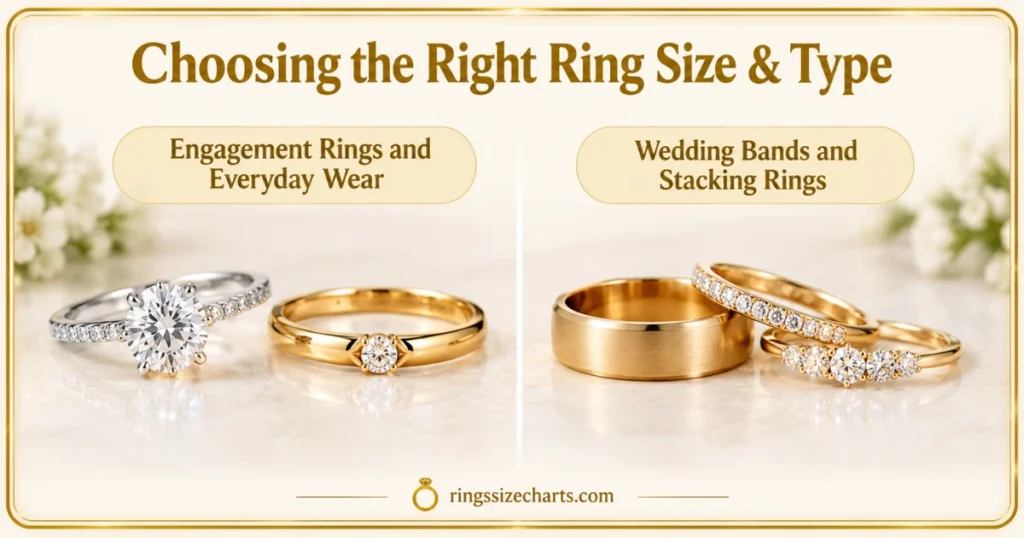
Engagement Rings and Everyday Wear
Since an engagement ring is worn daily, most people prefer a slightly snugger fit for security. A little extra resistance going on is worth the peace of mind.
Wedding Bands and Stacking Rings
Stacking rings and wedding bands often fit differently side by side than they do alone. It helps to try them on together before finalizing your size.
When and How to Resize a Ring
Signs It’s Time for Resizing
If your ring consistently spins, slips, or pinches over several weeks, it’s likely time for professional resizing. Occasional tightness from swelling doesn’t count.
How Much a Ring Can Be Resized
Most rings can be adjusted up or down about two sizes without compromising strength. Going beyond that range can weaken the band’s structure.
Rings That Are Harder to Resize
Eternity bands and rings with stones set all the way around are trickier to resize than a simple solitaire. Always ask your jeweler before assuming resizing is simple.
Tips for a Comfortable, Lasting Fit
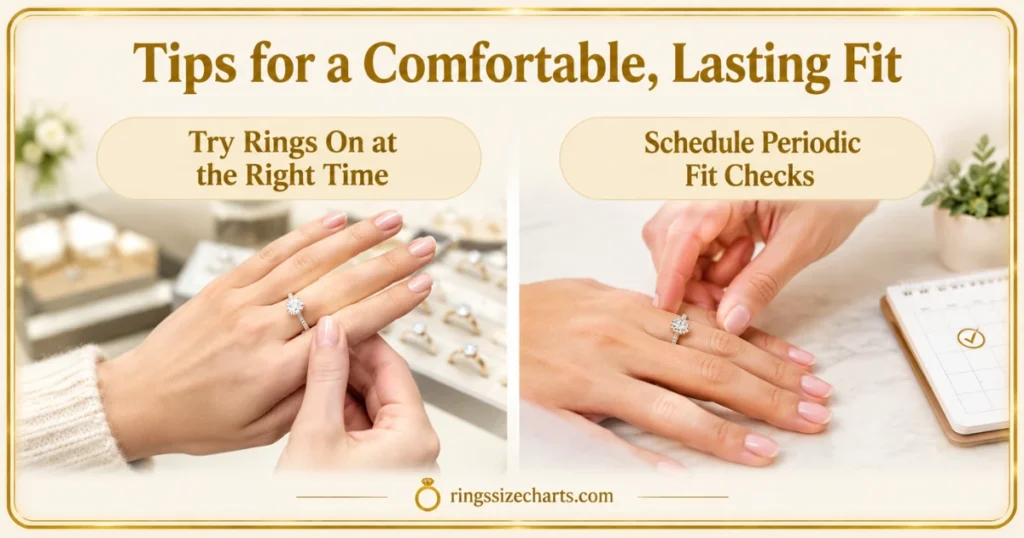
Try Rings On at the Right Time
Shop for rings in the afternoon, avoiding mornings, workouts, or extreme temperatures. This gives you the most accurate everyday fit.
Schedule Periodic Fit Checks
Have a jeweler check your fit once a year, especially after weight changes or pregnancy. Catching a sizing issue early prevents bigger problems later.
More Posts: Ring Size Chart & Guide
Conclusion
Knowing how a ring should fit makes wearing it comfortable and worry-free every single day. Pay attention to resistance, spinning, and marks to catch sizing issues early. With the right fit, your ring becomes something you barely notice — in the best way.
FAQ’s
How do I know my ring size at home?
Use a printable ring sizer or wrap a string around your finger and measure it against a ring size chart.
What happens if my ring is too tight?
A tight ring can cause numbness, indentations, or discoloration, signaling it needs resizing soon.
Is it normal for ring size to change with the seasons?
Yes, cold weather shrinks fingers while heat and humidity cause natural swelling in most people.
How many times can a ring be resized?
Most rings can be resized two to three times over their lifetime without weakening the band.
Should I size up or down if I’m between sizes?
Most jewelers recommend sizing up slightly, since a snug ring is easier to resize than a dangerously loose one.

Hi, I’m Wesley Turner, the admin at RingsSizeCharts.com. We simplify ring sizing, measurements, and size conversions with easy-to-follow guides, accurate charts, and practical tips to help you find the perfect ring fit with confidence.